
Oven-Baked BBQ Ribs
Oven baked BBQ ribs are easier to make than you might think, especially when you let the oven do most of the work. A sealed foil packet keeps the pork moist while it cooks slowly, and a quick turn under the broiler gives the barbecue sauce a sticky finish.
This version starts with baby back ribs and a few pantry spices, then uses a homemade sauce made with ketchup, brown sugar, vinegar, and a little yellow mustard. You get tender meat, a sweet-and-tangy coating, and no need to light a grill.
Plan this one for a day when you have a little time at home, but not much time to stand over the stove. Most of the cooking is hands-off, and you can prepare the sauce while the ribs are in the oven.
Why You’ll Love This Recipe
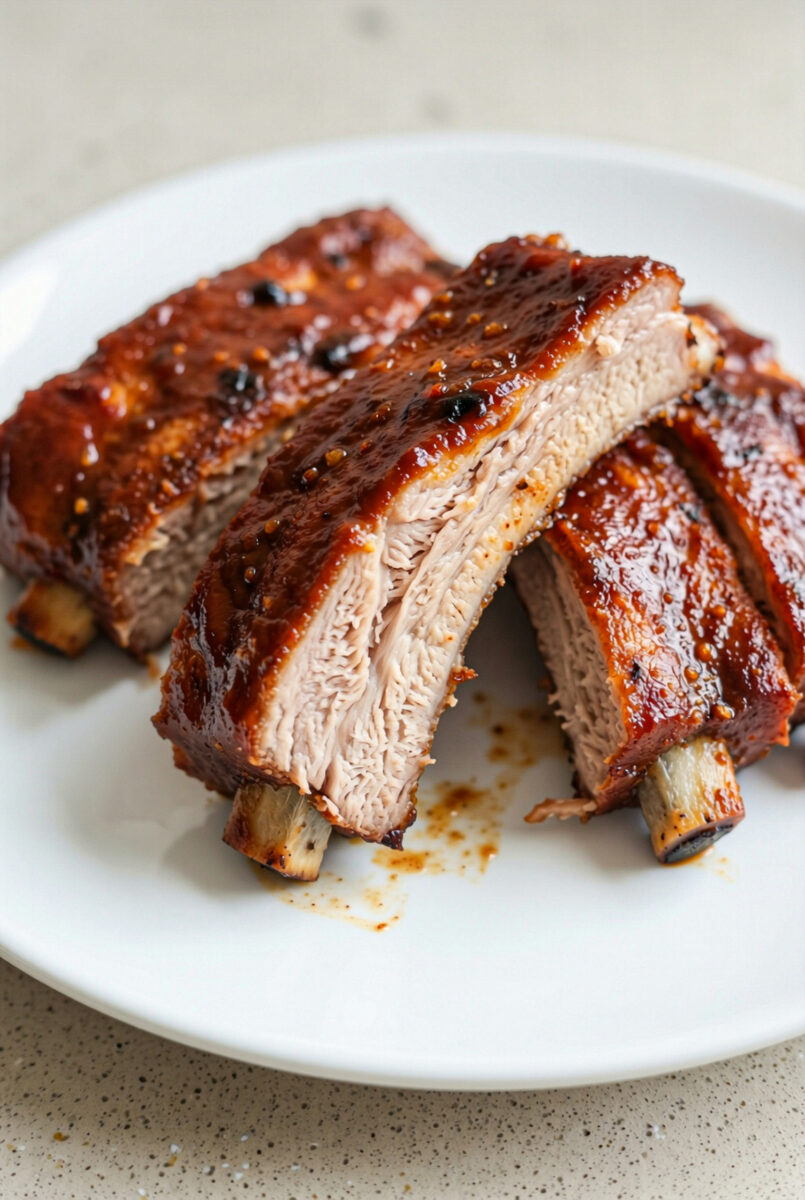
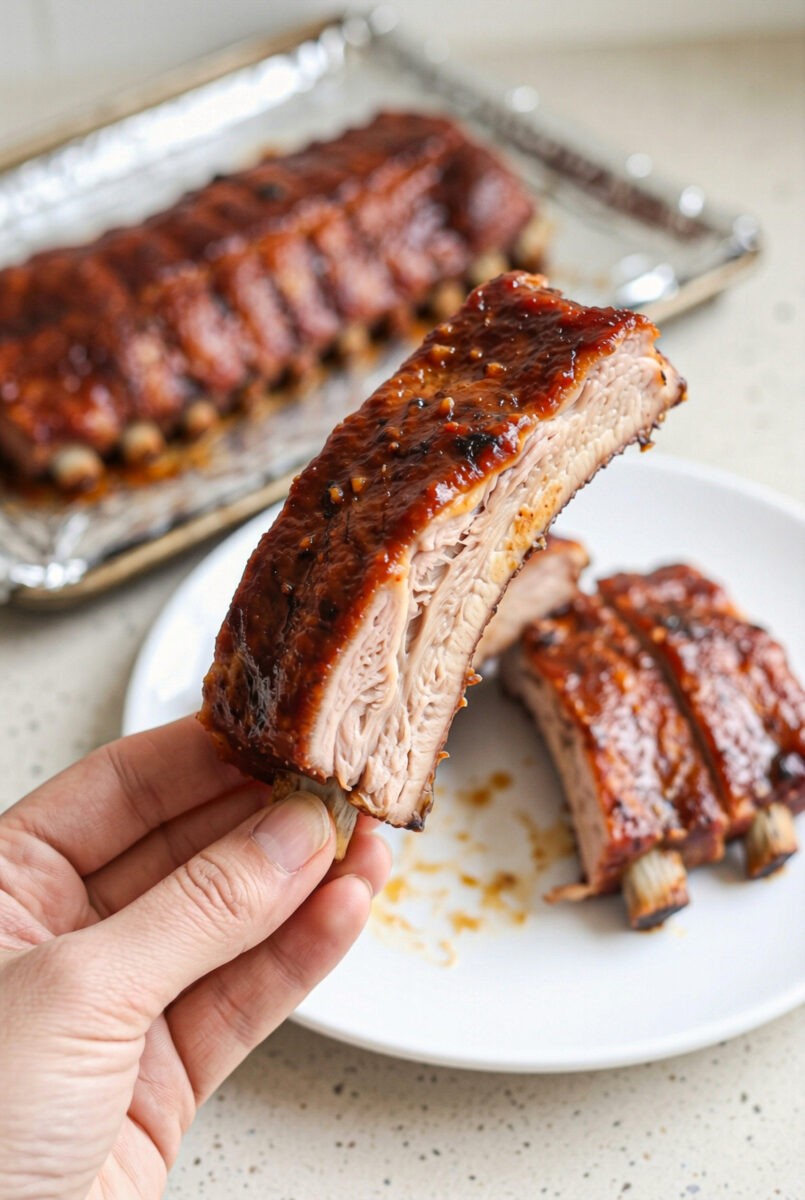
The biggest advantage is how little attention the ribs need once they are wrapped and baking. You do not have to flip them, watch a smoker, or keep adding liquid, and the foil catches the juices so the baking sheet is much easier to clean.
The sauce is made from ingredients that are easy to keep on hand, and you can adjust the sweetness without changing the method. It also works well for a relaxed dinner with coleslaw and potatoes, and any extra ribs reheat nicely the next day.
Ingredients You’ll Need
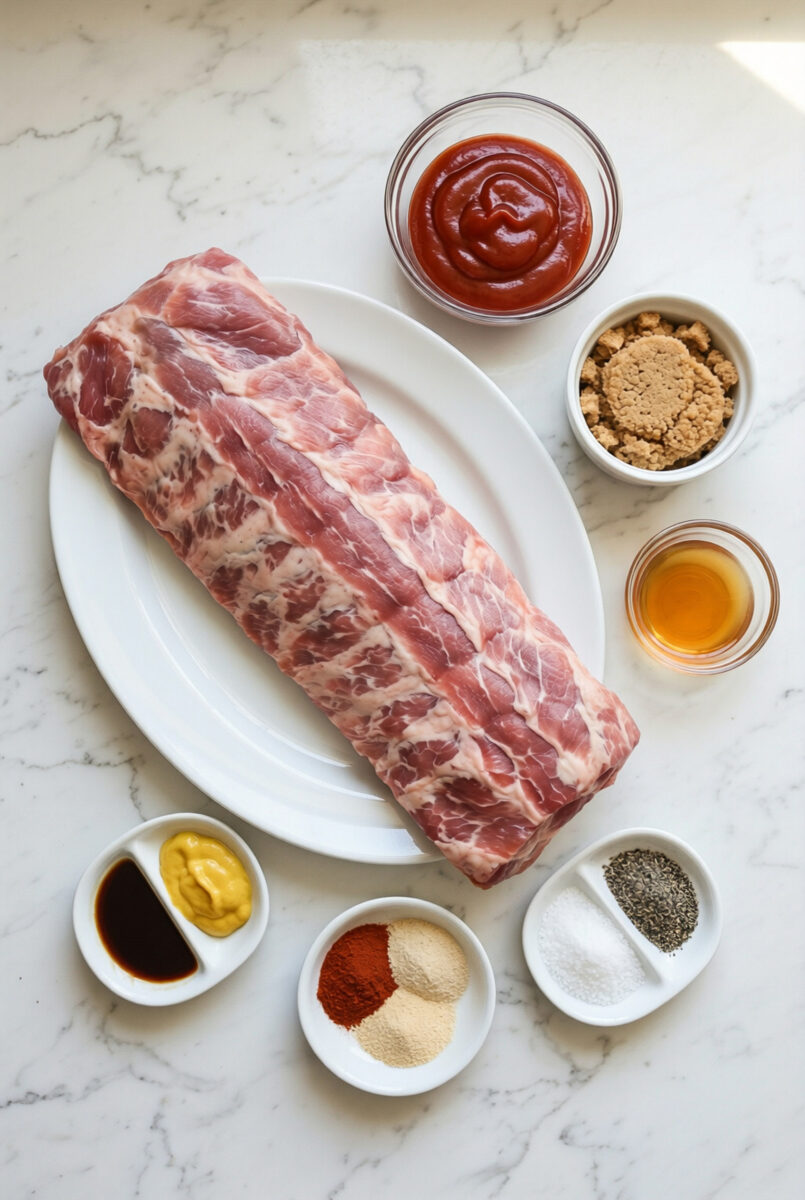
You will need baby back pork ribs, kosher salt, black pepper, smoked paprika, garlic powder, and onion powder for the meat. For the barbecue sauce, gather ketchup, light brown sugar, apple cider vinegar, Worcestershire sauce, yellow mustard, and a second small measure of the smoked paprika, garlic powder, onion powder, and black pepper.
Use thawed ribs rather than trying to cook them from frozen, and choose a regular ketchup that you already like. Exact measurements for the rub and sauce are in the recipe card below.
Baby Back Ribs
Look for a rack weighing about 2½ to 3 pounds. Baby backs are a practical choice here because they fit on a sheet pan more easily than a long rack of spare ribs, and the meat usually gets tender within the suggested oven time.
Smoked Paprika
Smoked paprika gives the rub and sauce a gentle smoky taste even though the ribs never go near a grill. If you have only regular paprika, you can use it, but the finished ribs will have less of that barbecue-style smokiness.
Apple Cider Vinegar
Vinegar keeps the ketchup-and-brown-sugar sauce from tasting overly sweet. Two tablespoons are enough to add a little tang without making the sauce taste sharp; plain white vinegar will taste stronger and is not quite the same swap.
Yellow Mustard
A teaspoon of yellow mustard blends right into the sauce and adds a small savory bite. It will not make the ribs taste like mustard, and you can use a mild Dijon in a pinch if that is what you have.
How to Make Oven-Baked BBQ Ribs
Here is how to get tender ribs with a sticky coating, without using a grill.
Get the Ribs Ready
Heat the oven to 300°F and line a rimmed baking sheet with heavy-duty foil. Peel away the thin membrane from the bone side of the ribs if it is still attached, pat the rack dry, and cut it into two pieces if needed to fit the pan.
Season and Wrap
Stir together the salt, black pepper, smoked paprika, garlic powder, and onion powder listed for the rub. Coat both sides of the ribs, set them meat side up on a large piece of foil, and seal the packet tightly so the steam stays inside.
Bake Until Tender
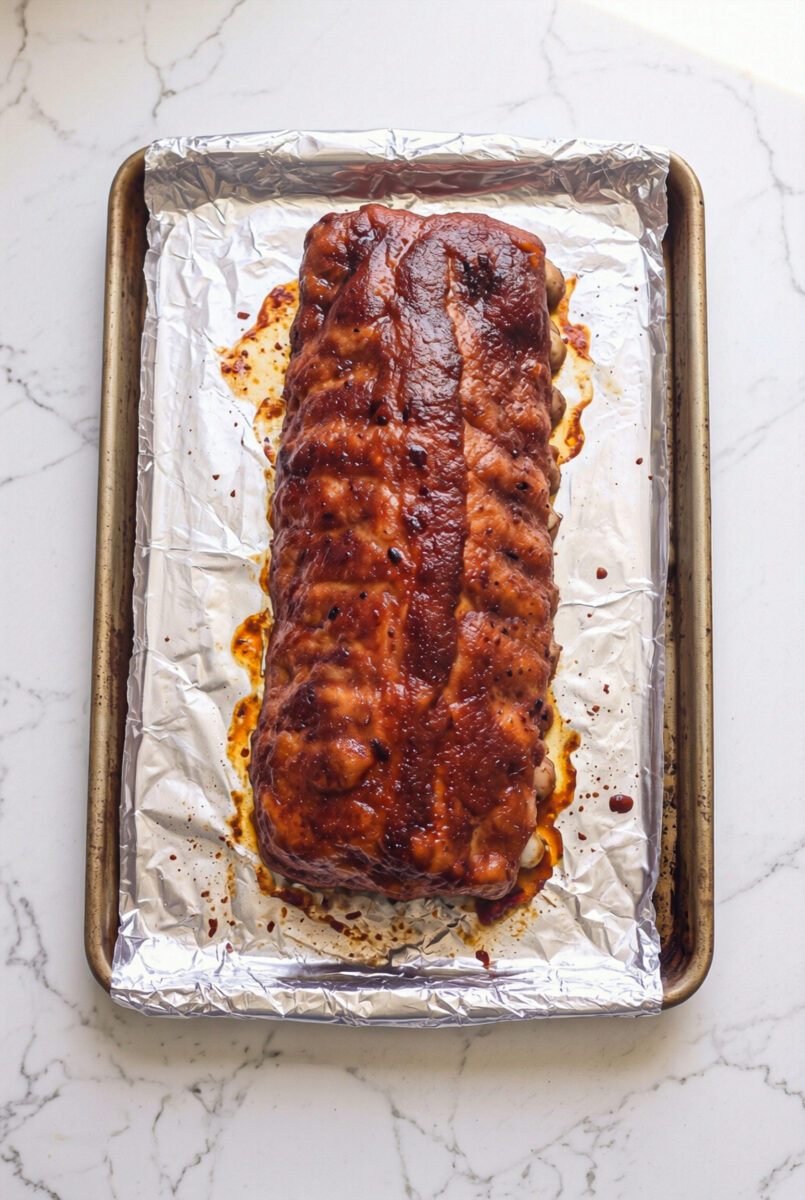
Bake the foil-wrapped ribs for about 2½ to 3 hours, checking near the earlier end of the range. They are ready for the sauce when the rack bends easily as you lift it with tongs and the meat has pulled back a little from the ends of the bones.
Cook the Sauce
While the ribs bake, stir the ketchup, brown sugar, apple cider vinegar, Worcestershire sauce, yellow mustard, and sauce seasonings in a small saucepan. Let the mixture bubble gently over medium-low heat for 5 to 7 minutes, stirring occasionally, then set aside a little clean sauce for serving.
Brush and Broil
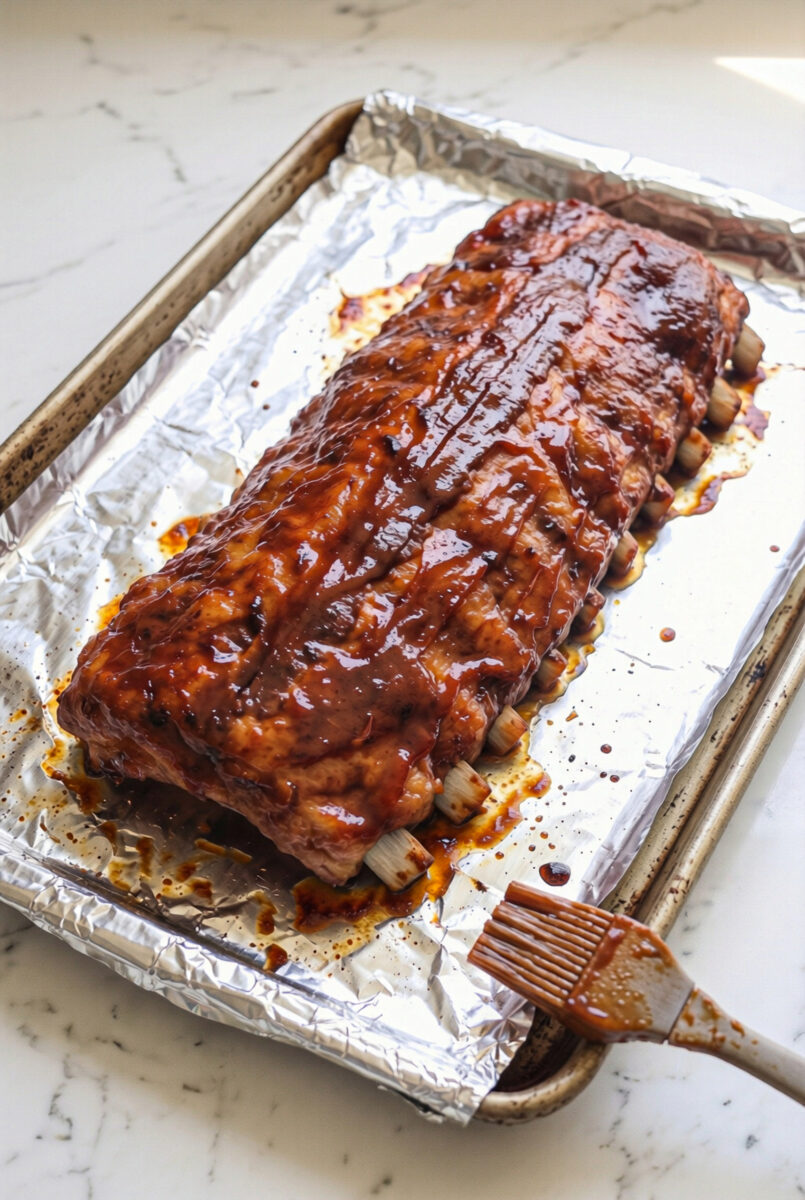
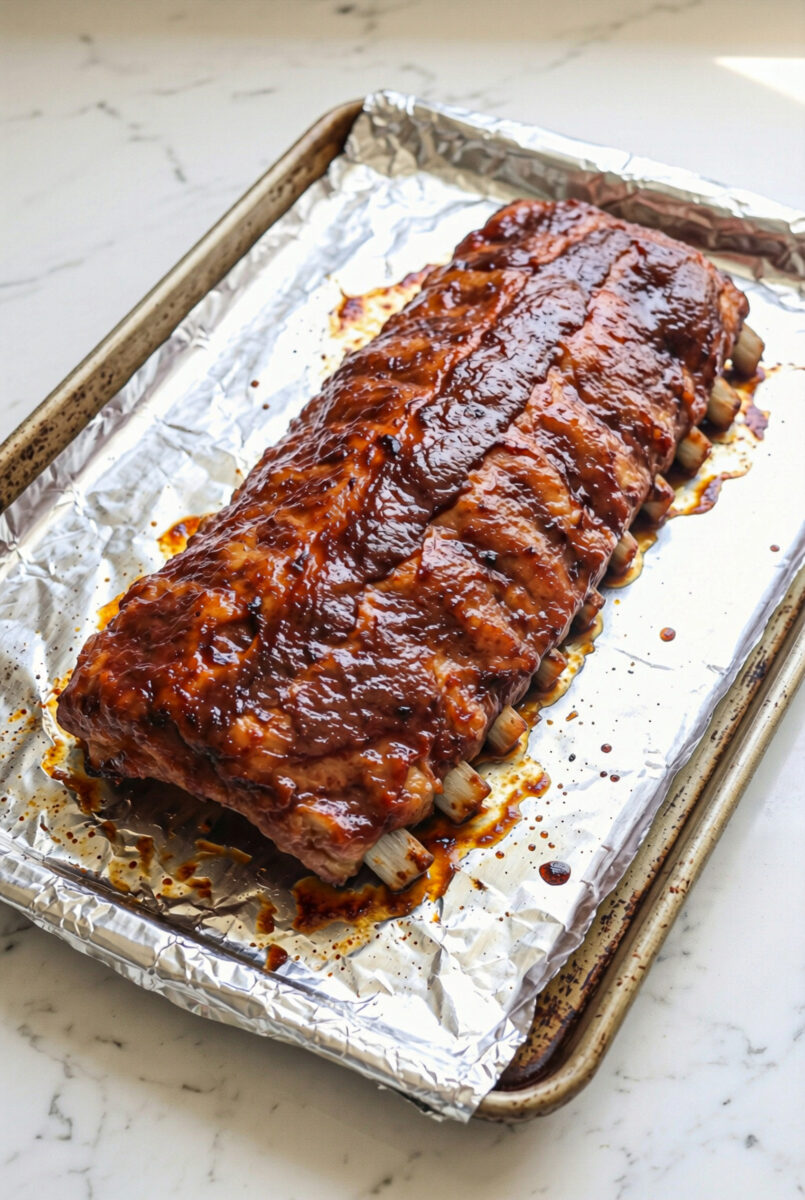
Carefully open the foil, keeping your hands away from the hot steam, and place the ribs meat side up on the lined pan. Brush with the remaining sauce and broil about 6 inches from the heat for 3 to 5 minutes, just until the coating bubbles and looks sticky.
Rest and Slice
Let the ribs rest for 5 minutes before slicing between the bones. Serve with the clean sauce you saved earlier and your favorite side dishes.
Tips
Check for the membrane before seasoning. It looks like a thin, shiny layer on the bone side, and slipping a butter knife underneath one edge lets you pull it off with a paper towel for a better grip.
Use the bend test instead of treating the clock as a guarantee. A rack that still feels stiff needs more covered oven time; for very tender ribs, a thermometer inserted between bones often reads around 190–200°F, which is well above the minimum safe pork temperature.
Keep the foil packet tightly closed during the long bake. If the rack is too large, cut it into two portions rather than leaving a gap that lets the steam escape and dries the meat.
Watch the ribs the entire time they are under the broiler. Sweet barbecue sauce can go from bubbling to burnt quickly, especially if the oven rack is very close to the heating element.
Storage, Freezing, and Reheating
Refrigerate cooked ribs in a covered container within 2 hours of cooking and use within 3 to 4 days. Keep leftover sauce in its own clean container if possible.
Wrap cooled portions tightly and freeze for up to 3 months for best quality. Thaw overnight in the refrigerator so they warm through more evenly.
Cover ribs with foil and heat in a 300°F oven until the middle reaches 165°F, adding a spoonful of sauce if they seem dry. Cooking time will depend on how many ribs you are reheating.
What to Serve with Oven-Baked BBQ Ribs
Creamy Coleslaw. Cool, crunchy cabbage is a nice break from the sticky, sweet sauce.
Baked Potatoes. Split hot baked potatoes and spoon a little extra barbecue sauce over the top if you like.
Skillet Corn. Sweet corn with a little butter keeps the meal simple and makes good use of summer produce.
Cornbread. A square of cornbread is handy for catching the sauce left on the plate.
Frequently Asked Questions
Can I season the ribs the night before?
Yes. Rub the ribs with the dry seasonings, cover, and refrigerate them overnight; then wrap and bake when ready. Keep the raw pork cold until it goes into the oven.
Can I make these with spare ribs?
You can, but spare ribs are generally bigger and fattier than baby backs and may need more oven time. Use the bend test and let them stay covered until the meat is tender rather than following the baby back timing exactly.
Why are my ribs still tough after baking?
They probably need more time in the sealed foil packet. Keep baking at 300°F and check again in 15- to 20-minute intervals; do not add the sticky sauce until the meat has softened.
Do I have to use a broiler?
The broiler is what makes the sauce bubble and cling to the meat, but it is not needed to finish cooking the ribs. If you skip it, brush on the warm sauce and serve; the coating will be softer and less sticky.
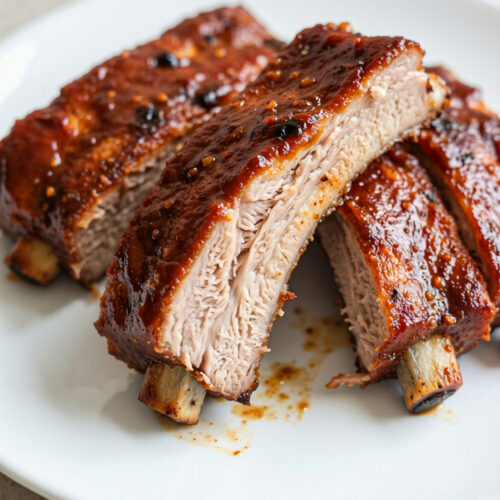
Oven-Baked BBQ Ribs
JenniferEquipment
- Rimmed baking sheet
- Heavy duty aluminum foil
- Small saucepan
- small mixing bowl
- Basting brush
- Tongs
- Sharp knife
Ingredients
Dry Rub
- 1 rack pork baby back ribs 2½–3 lb, membrane removed; fully thawed
- 1 tsp kosher salt
- 1 tsp ground black pepper
- 1 tsp smoked paprika
- 1/2 tsp garlic powder
- 1/2 tsp onion powder
BBQ Sauce
- 1/2 cup ketchup
- 3 tbsp packed light brown sugar
- 2 tbsp apple cider vinegar
- 1 tbsp Worcestershire sauce
- 1 tsp yellow mustard
- 1 tsp smoked paprika
- 1/2 tsp garlic powder
- 1/2 tsp onion powder
- 1/4 tsp ground black pepper
Instructions
- Prepare the oven and ribs. Preheat the oven to 300°F. Place a long piece of heavy-duty foil on a rimmed baking sheet. Remove the membrane from the back of the ribs if present, pat dry, and cut the rack in half if necessary to fit the pan.
- Mix and apply the rub. Mix the 1 tsp kosher salt, 1 tsp black pepper, 1 tsp smoked paprika, ½ tsp garlic powder, and ½ tsp onion powder in a small bowl. Rub all over the ribs. Set ribs meat side up on the foil and seal into a tight packet; add a second sheet of foil if needed.
- Bake until tender. Bake the wrapped ribs at 300°F for 2½ to 3 hours. Check at 2½ hours; they should bend easily when lifted with tongs and the meat should pull back slightly from the bones. If still stiff, reseal and bake longer.
- Prepare the barbecue sauce. While the ribs bake, combine the ½ cup ketchup, 3 tbsp light brown sugar, 2 tbsp apple cider vinegar, 1 tbsp Worcestershire sauce, 1 tsp yellow mustard, 1 tsp smoked paprika, ½ tsp garlic powder, ½ tsp onion powder, and ¼ tsp black pepper in a small saucepan. Simmer over medium-low heat for 5–7 minutes, stirring until smooth. Reserve about 2 tbsp in a clean bowl for serving before using the rest on the ribs.
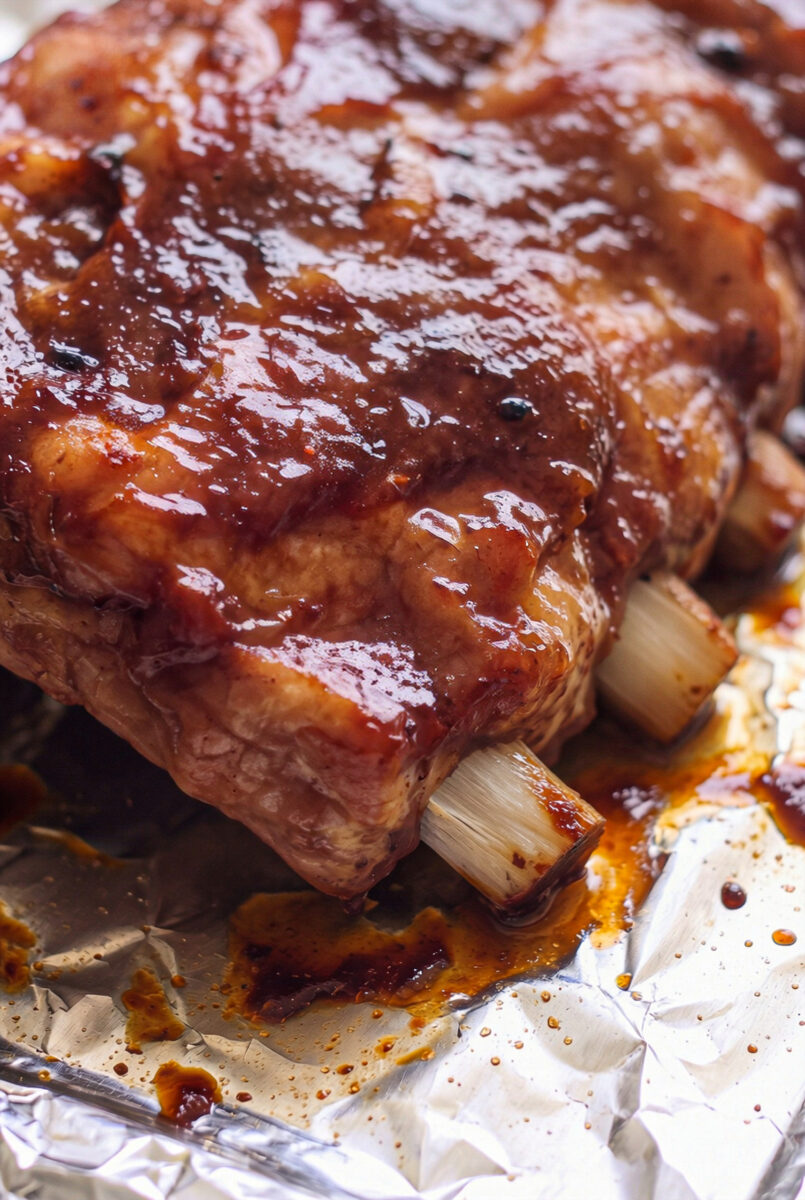
- Glaze and broil. Carefully open the foil, watching for hot steam, and arrange ribs meat side up on the foil-lined pan. Brush with the sauce from the saucepan, then broil about 6 inches from the element for 3–5 minutes, watching continuously, until the glaze is bubbling and sticky.
- Rest and serve. Rest ribs for 5 minutes. Cut between the bones and serve with the 2 tbsp clean reserved barbecue sauce.
Notes
- The cook-time field allows up to 3 hours for the covered bake plus 5 minutes under the broiler; some racks finish sooner. Total time includes a 5-minute rest.
- Use tenderness as the final test: ribs should bend easily and the meat should pull back from the bones. A thermometer between the bones may read roughly 190–200°F for very tender ribs.
- Brown sugar and mustard go into the sauce, not the dry rub. Do not brush raw-meat-contacted sauce onto cooked ribs.
- If your foil is thin, use two sheets to prevent leaking. The ribs should stay covered until tender.
- Refrigerate leftovers within 2 hours, use within 3–4 days, and reheat to 165°F.
Nutrition
*Nutritional information is a calculated guesstimate. Please note that this can change with different brands and modifications you may make to the recipe. For the most accurate information, use a nutritional calculator with the exact brands and measurements you’re using with each recipe.
©PinkWhen 2026
Hi! I'm Jen, a wife, mother, and tennis lover who likes to share all of my quick easy recipes, crafts, and more. Visit my website for all of my tasty recipes.
- Jennifer
- Jennifer
- Jennifer
- Jennifer
- Jennifer
- Jennifer
- Jennifer
- Jennifer
- Jennifer
- Jennifer
- Jennifer
- Jennifer
- Jennifer
- Jennifer
- Jennifer
- Jennifer
- Jennifer
- Jennifer
- Jennifer
- Jennifer
- Jennifer
- Jennifer
- Jennifer
- Jennifer
- Jennifer
- Jennifer
- Jennifer
- Jennifer
- Jennifer
- Jennifer
- Jennifer
- Jennifer
- Jennifer
- Jennifer
- Jennifer
- Jennifer
- Jennifer
- Jennifer
- Jennifer
- Jennifer
- Jennifer
- Jennifer
- Jennifer
- Jennifer
- Jennifer
- Jennifer
- Jennifer
- Jennifer
- Jennifer
- Jennifer
- Jennifer
- Jennifer
- Jennifer
- Jennifer
- Jennifer
- Jennifer
- Jennifer
- Jennifer
- Jennifer
- Jennifer
- Jennifer
- Jennifer
- Jennifer
- Jennifer
- Jennifer
- Jennifer
- Jennifer
- Jennifer
- Jennifer
- Jennifer
- Jennifer
- Jennifer
- Jennifer
- Jennifer
- Jennifer
- Jennifer
- Jennifer
- Jennifer
- Jennifer
- Jennifer
- Jennifer
- Jennifer
- Jennifer
- Jennifer
- Jennifer
- Jennifer
- Jennifer
- Jennifer
- Jennifer
- Jennifer
- Jennifer
- Jennifer
- Jennifer
- Jennifer
- Jennifer
- Jennifer
- Jennifer
- Jennifer
- Jennifer
- Jennifer
- Jennifer
- Jennifer
- Jennifer
- Jennifer
- Jennifer
- Jennifer
- Jennifer
- Jennifer
- Jennifer
- Jennifer
- Jennifer
- Jennifer
- Jennifer
- Jennifer
- Jennifer
- Jennifer
- Jennifer
- Jennifer
- Jennifer
- Jennifer
- Jennifer
- Jennifer
- Jennifer
- Jennifer
- Jennifer
- Jennifer
- Jennifer
- Jennifer
- Jennifer
- Jennifer
- Jennifer
- Jennifer
- Jennifer
- Jennifer
- Jennifer
- Jennifer
- Jennifer
- Jennifer
- Jennifer
- Jennifer
- Jennifer
- Jennifer
- Jennifer
- Jennifer
- Jennifer
- Jennifer
- Jennifer
- Jennifer
- Jennifer
- Jennifer
- Jennifer
- Jennifer
- Jennifer
- Jennifer
- Jennifer
- Jennifer
- Jennifer
- Jennifer
- Jennifer
- Jennifer
- Jennifer
- Jennifer
- Jennifer
- Jennifer
- Jennifer
- Jennifer
- Jennifer
- Jennifer
- Jennifer
- Jennifer
- Jennifer
- Jennifer
- Jennifer
- Jennifer
- Jennifer
- Jennifer
- Jennifer
- Jennifer
- Jennifer
- Jennifer
- Jennifer
- Jennifer
- Jennifer
- Jennifer
- Jennifer
- Jennifer
- Jennifer
- Jennifer
- Jennifer
- Jennifer
- Jennifer
- Jennifer
- Jennifer
- Jennifer
- Jennifer
- Jennifer
- Jennifer
- Jennifer
- Jennifer
- Jennifer
- Jennifer
- Jennifer
- Jennifer
- Jennifer
- Jennifer
- Jennifer
- Jennifer
- Jennifer
- Jennifer
- Jennifer
- Jennifer
- Jennifer
- Jennifer
- Jennifer
- Jennifer
- Jennifer
- Jennifer
- Jennifer
- Jennifer
- Jennifer
- Jennifer
- Jennifer
- Jennifer
- Jennifer
- Jennifer
- Jennifer
- Jennifer
- Jennifer
- Jennifer
- Jennifer
- Jennifer
- Jennifer
- Jennifer
- Jennifer
- Jennifer
- Jennifer
- Jennifer
- Jennifer
- Jennifer
- Jennifer
- Jennifer
- Jennifer
- Jennifer
- Jennifer
- Jennifer
- Jennifer
- Jennifer
- Jennifer
- Jennifer
- Jennifer
- Jennifer
- Jennifer
- Jennifer
- Jennifer
- Jennifer
- Jennifer
- Jennifer
- Jennifer
- Jennifer
- Jennifer
- Jennifer
- Jennifer
- Jennifer
- Jennifer
- Jennifer
- Jennifer
- Jennifer
- Jennifer
- Jennifer
- Jennifer
- Jennifer
- Jennifer
- Jennifer
- Jennifer
- Jennifer
- Jennifer
- Jennifer
- Jennifer
- Jennifer
- Jennifer
- Jennifer
- Jennifer
- Jennifer
- Jennifer
- Jennifer
- Jennifer
- Jennifer
- Jennifer
- Jennifer
- Jennifer
- Jennifer
- Jennifer
- Jennifer
- Jennifer
- Jennifer
- Jennifer
- Jennifer
- Jennifer
- Jennifer
- Jennifer
- Jennifer
- Jennifer
- Jennifer
- Jennifer
- Jennifer
- Jennifer
- Jennifer
- Jennifer
- Jennifer
- Jennifer
- Jennifer
- Jennifer
- Jennifer
- Jennifer
- Jennifer
- Jennifer
- Jennifer
- Jennifer
- Jennifer
- Jennifer
- Jennifer
- Jennifer
- Jennifer
- Jennifer
- Jennifer
- Jennifer
- Jennifer
- Jennifer
- Jennifer
- Jennifer
- Jennifer
- Jennifer
- Jennifer
- Jennifer
- Jennifer
- Jennifer
- Jennifer
- Jennifer
- Jennifer
- Jennifer
- Jennifer
- Jennifer
- Jennifer
- Jennifer
- Jennifer
- Jennifer
- Jennifer
- Jennifer
- Jennifer
- Jennifer
- Jennifer
- Jennifer
- Jennifer
- Jennifer
- Jennifer
- Jennifer
- Jennifer
- Jennifer
- Jennifer
- Jennifer
- Jennifer
- Jennifer
- Jennifer
- Jennifer
- Jennifer
- Jennifer
- Jennifer
- Jennifer
- Jennifer
- Jennifer
- Jennifer
- Jennifer
- Jennifer
- Jennifer
- Jennifer
- Jennifer
- Jennifer
- Jennifer
- Jennifer
- Jennifer
- Jennifer
- Jennifer
- Jennifer
- Jennifer
- Jennifer
- Jennifer
- Jennifer
- Jennifer
- Jennifer
- Jennifer
- Jennifer
- Jennifer
- Jennifer
- Jennifer
- Jennifer
- Jennifer
- Jennifer
- Jennifer
- Jennifer
- Jennifer
- Jennifer
- Jennifer
- Jennifer
- Jennifer
- Jennifer
- Jennifer
- Jennifer
- Jennifer
- Jennifer
- Jennifer
- Jennifer
- Jennifer
- Jennifer
- Jennifer
- Jennifer
- Jennifer
- Jennifer
- Jennifer
- Jennifer
- Jennifer
- Jennifer
- Jennifer
- Jennifer
- Jennifer
- Jennifer
- Jennifer
- Jennifer
- Jennifer
- Jennifer
- Jennifer
- Jennifer
- Jennifer
- Jennifer
- Jennifer
- Jennifer
- Jennifer
- Jennifer
- Jennifer
- Jennifer
- Jennifer
- Jennifer
- Jennifer
- Jennifer
- Jennifer
- Jennifer
- Jennifer
- Jennifer
- Jennifer
- Jennifer
- Jennifer
- Jennifer
- Jennifer
- Jennifer
- Jennifer
- Jennifer
- Jennifer
- Jennifer
- Jennifer
- Jennifer
- Jennifer
- Jennifer
- Jennifer
- Jennifer
- Jennifer
- Jennifer
- Jennifer
- Jennifer
- Jennifer
- Jennifer
- Jennifer
- Jennifer
- Jennifer
- Jennifer
- Jennifer
- Jennifer
- Jennifer
- Jennifer
- Jennifer
- Jennifer
- Jennifer
- Jennifer
- Jennifer
- Jennifer
- Jennifer
- Jennifer
- Jennifer
- Jennifer
- Jennifer
- Jennifer
- Jennifer
- Jennifer
- Jennifer
- Jennifer
- Jennifer
- Jennifer
- Jennifer
- Jennifer
- Jennifer
- Jennifer
- Jennifer
- Jennifer
- Jennifer
- Jennifer
- Jennifer
- Jennifer
- Jennifer
- Jennifer
- Jennifer
- Jennifer
- Jennifer
- Jennifer
- Jennifer
- Jennifer
- Jennifer
- Jennifer
- Jennifer
- Jennifer
- Jennifer
- Jennifer
- Jennifer
- Jennifer
- Jennifer
- Jennifer
- Jennifer
- Jennifer
- Jennifer
- Jennifer
- Jennifer
- Jennifer
- Jennifer
- Jennifer
- Jennifer
- Jennifer
- Jennifer
- Jennifer
- Jennifer
- Jennifer
- Jennifer
- Jennifer
- Jennifer
- Jennifer
- Jennifer